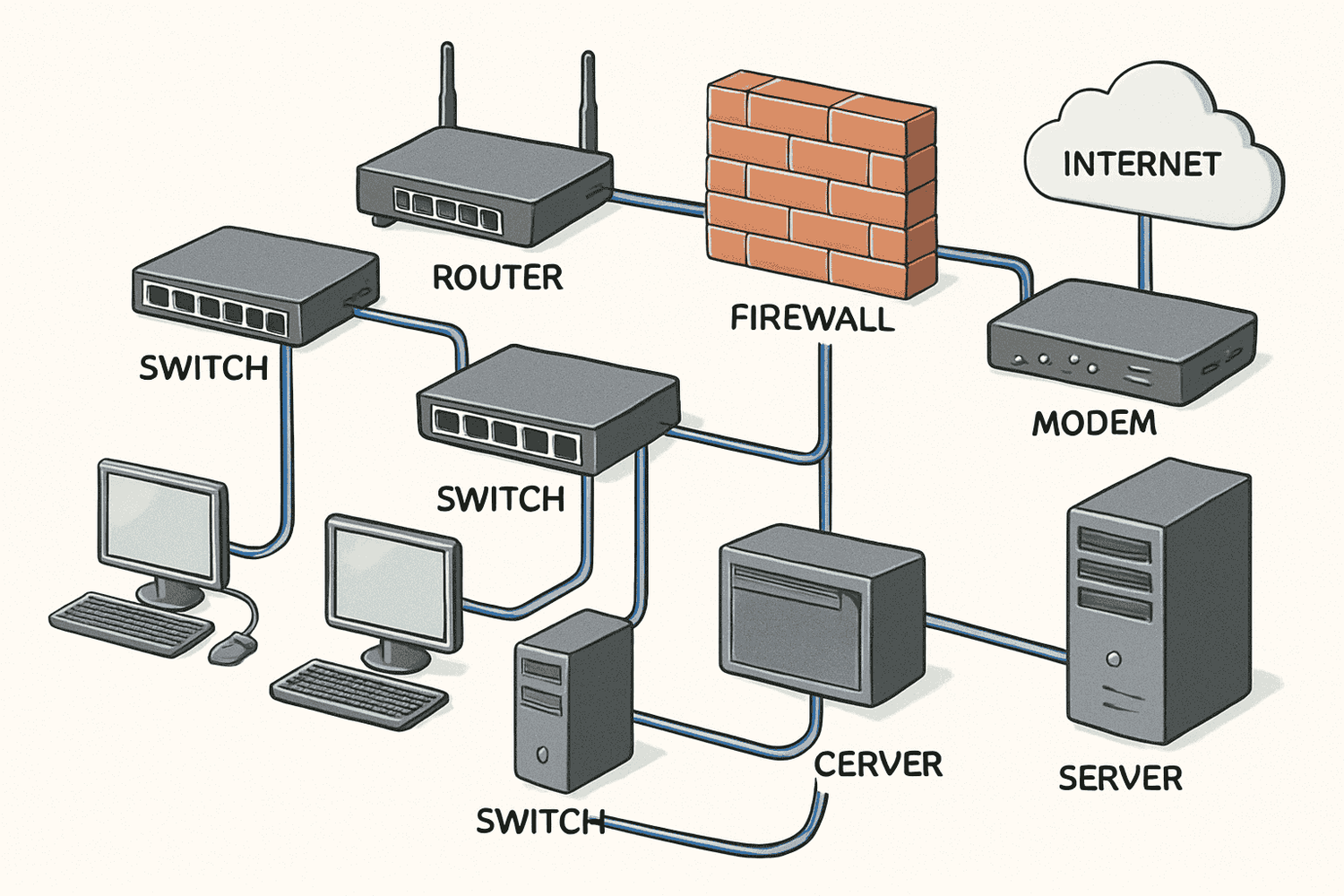
Network Switch vs Router
In the world of networking, both network switches and routers are essential devices, but they serve distinct purposes. To design an efficient and secure network, it's important to understand how these devices function, their roles, and when to use each. This article provides a detailed comparison of network switches and routers to help guide network setup decisions.
What Is a Network Switch?
A network switch primarily connects multiple devices within a Local Area Network (LAN). It operates at the Data Link Layer (Layer 2) of the OSI model by forwarding data frames based on MAC addresses. Modern switches may also offer Layer 3 capabilities for routing within LAN subnets.
Switches manage traffic efficiently by sending data only to the target device, minimizing collisions and optimizing bandwidth. Features commonly found in switches include VLAN support, link aggregation, Power over Ethernet (PoE), and Quality of Service (QoS) to prioritize traffic.
What Is a Router?
A router connects different networks and operates at the Network Layer (Layer 3) of the OSI model. It forwards data packets based on IP addresses, directing internet traffic between multiple networks, such as a home or business network and the internet.
Routers often provide essential network services, including Network Address Translation (NAT), firewall security, DHCP services, and VPN support, making them critical for securing and managing network traffic between external and internal networks.
When to Use Switches vs Routers?
Use network switches to expand and connect devices inside a LAN, improving communication speed and network efficiency.
Use routers to manage data flow across different networks, especially to and from the internet, and to enforce security policies.
Explore Used Ubiquiti Equipment for Network Optimization
For those interested in high-quality, scalable network switching solutions, the range of used Ubiquiti equipment offers robust performance and advanced features suitable for various network sizes and environments.
Understanding these fundamental differences ensures you choose the right networking devices that align with your specific use cases, whether for homes, offices, or enterprise environments, leading to efficient and secure network operations.
Also Read: Network Switch vs Router
Understanding these fundamental differences ensures you choose the right networking devices that align with your specific use cases, whether for homes, offices, or enterprise environments, leading to efficient and secure network operations. Additionally, as networks grow more complex and demanding, selecting equipment that combines performance, reliability, and scalability becomes critical.
Investing in enterprise-grade switches and routers can significantly enhance data throughput, network segmentation, and traffic prioritization, supporting the increasing number of connected devices and high-bandwidth applications. This ensures that mission-critical applications, cloud services, and multimedia streaming receive the necessary network resources without interruption or latency.